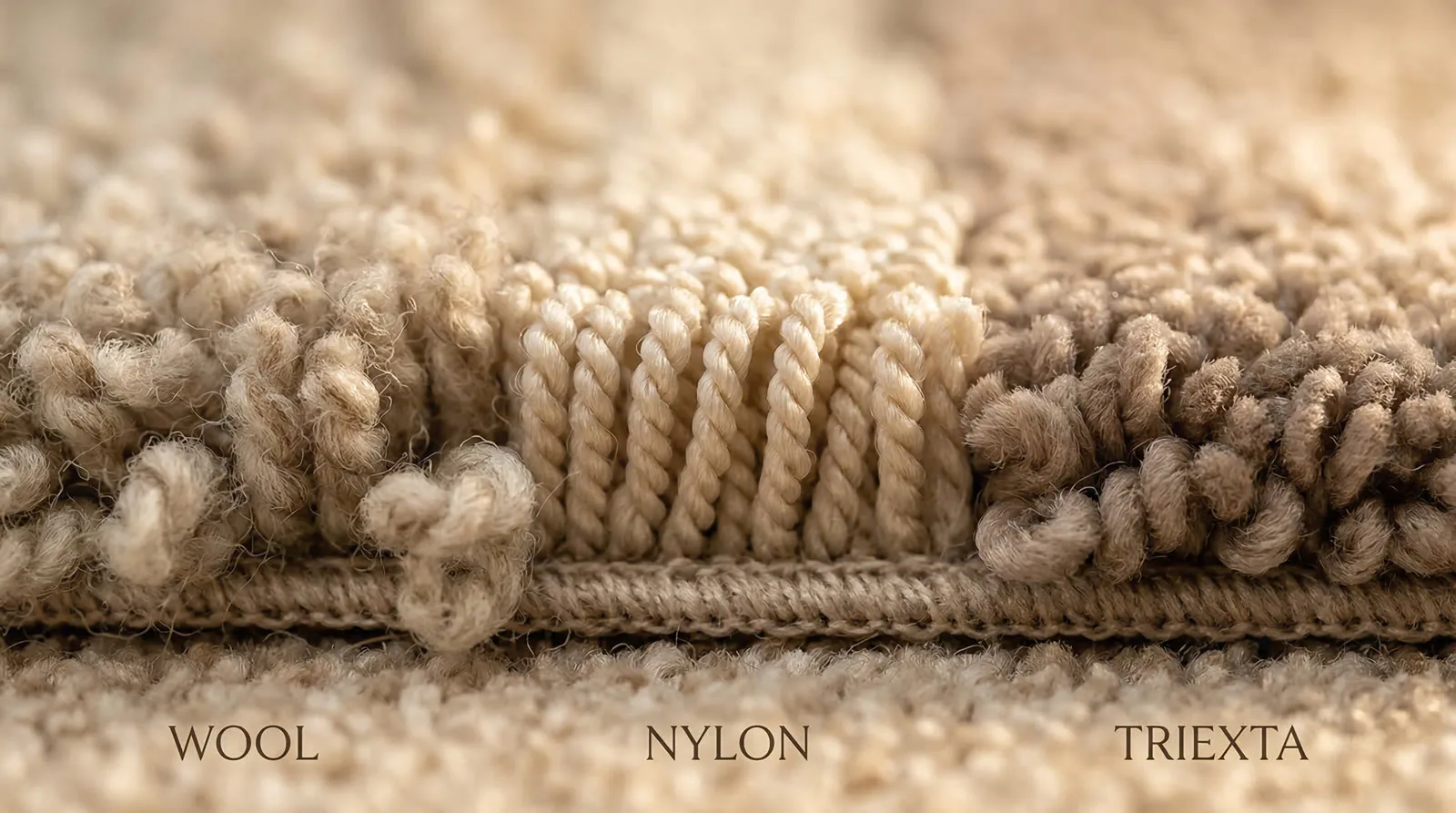
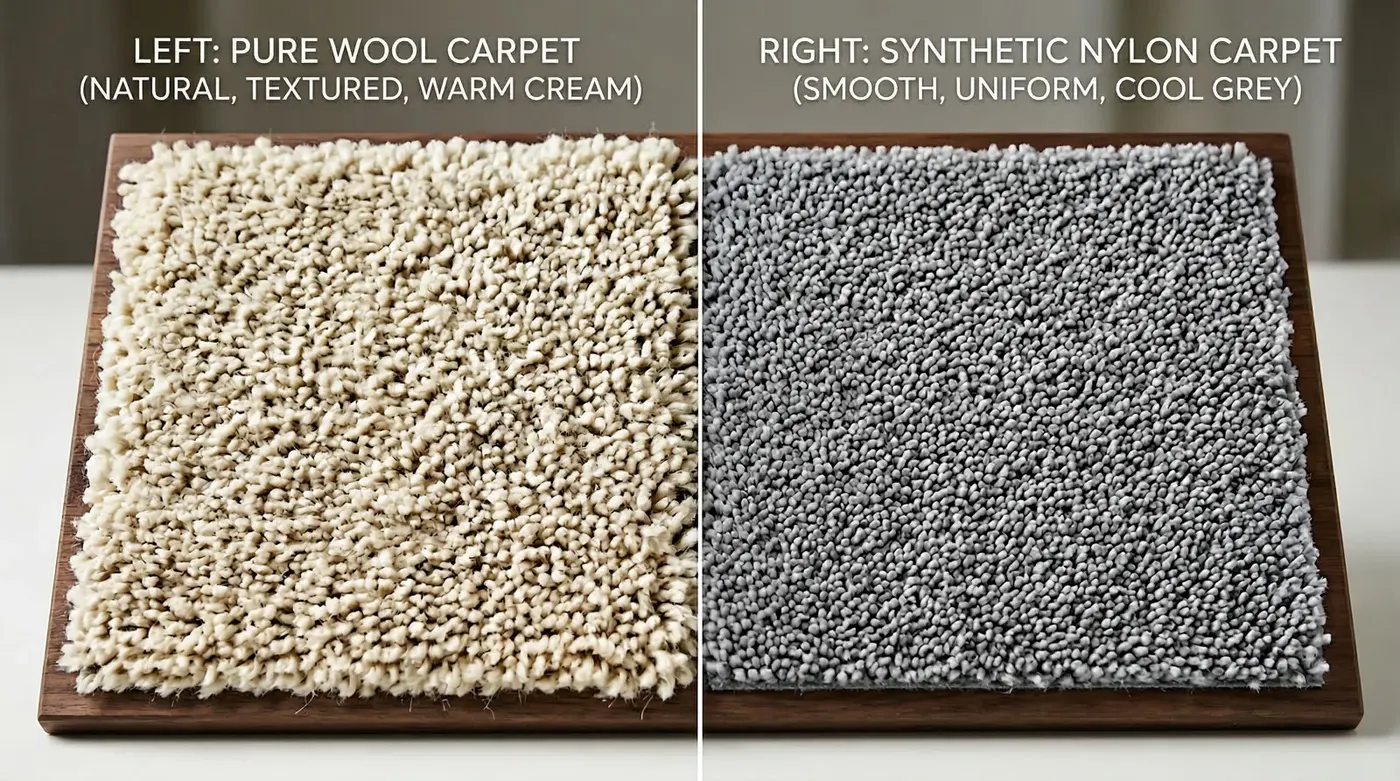
| Factor | Wool (Hycraft) | Triexta (Godfrey Hirst) | Solution-Dyed Nylon | Polyester |
|---|---|---|---|---|
| Softness underfoot | Excellent | Excellent | Good | Excellent |
| Thermal comfort | Excellent | Good | Good | Good |
| Stain resistance | Naturally repellent | Permanent (built into fibre) | Topical, wears off 5-7 yrs | Moderate |
| Allergy/asthma profile | Hypoallergenic, low-VOC | Low-VOC, no off-gassing | Some VOC potential | Some VOC potential |
| Lifespan | 25-40 years | 20-30 years | 15-25 years | 8-15 years |
| Fire behaviour | Naturally flame-retardant | Synthetic — melts | Synthetic — melts | Synthetic — melts |
| Melbourne price (carpet only) | $50-$140/m² | $50-$90/m² | $30-$90/m² | $25-$50/m² |
| Best for | Premium primary bedrooms | Family + pet bedrooms | Heavy-traffic bedrooms | Budget secondary bedrooms |
By The Flooring Centre Technical Team
The hardwood floor has had an exceptional decade. Its ascent from feature material to default residential specification has been one of the defining interior design movements of the 2010s and early 2020s, and largely for good reason — timber and engineered timber floors bring warmth, character, and commercial appeal to living spaces, kitchens, and open-plan areas. But somewhere in that momentum, the bedroom quietly became collateral damage. Timber crept from the hallway into the bedroom, and a generation of interior design clients accepted the swap without quite knowing what they had given up.
What they gave up is something the data supports and the body confirms every single morning: the unique sensory, acoustic, and thermal performance of a well-specified carpet in a private sleeping space. This is not nostalgia. It is physics, psychology, and considered specification — and it is why carpet remains, for a designer thinking carefully about occupant experience, the superior choice for the bedroom.
Quick answer
The best carpet for bedrooms in Australia is wool in a cut pile construction — naturally insulating against Melbourne's cold winter mornings, hypoallergenic, low-VOC, and pleasant underfoot when stepped onto barefoot. Hycraft and Feltex wool ranges (Geelong-made) lead the premium tier; Godfrey Hirst Solution Dyed Nylon is the family-friendly synthetic alternative at lower cost.
The four bedroom-specific factors that matter are: thermal comfort (wool retains warmth far better than synthetic), acoustic dampening (cut pile absorbs more footfall noise than loop), colour temperature (warm beiges and oats outperform cool greys for restful bedrooms), and VOC profile (wool off-gases nothing; some synthetic carpet emits formaldehyde for weeks after install). Pile heights, density specs and showroom-tested colour recommendations below.
Wool vs Triexta vs nylon vs polyester — bedroom-specific comparison
Each fibre family suits a different priority. The comparison below is bedroom-specific (priorities differ from living-area selection — softness underfoot and thermal comfort matter more, traffic durability matters less).
Pricing note. The figures above are 2026 carpet-only ranges from our Nunawading and Hawthorn showrooms — they exclude underlay (typically $12-$22/m² for the 10mm 120kg/m³ that we recommend) and installation. The wider the price band, the more variation exists within the fibre — wool covers everything from entry-level loop pile through to handloomed New Zealand wool plush. Always ask for the specific range price at point of sale.
The Morning Ritual: Thermal Comfort and Barefoot Contact
There is a moment every morning that most people take for granted until they no longer have it — the first step out of bed. On a cold Melbourne morning in July, when the ambient temperature in a bedroom may be 12–14°C, the surface temperature of an unheated concrete slab can drop to 10–11°C. Engineered hardwood, hybrid, and laminate products installed over that slab without underfloor heating will conduct cold directly to the foot within seconds of contact. The thermal conductivity of timber is approximately 0.12–0.17 W/m·K; a cold slab beneath it will equilibrate to the foot rapidly.
Carpet with a quality underlay operates differently. The fibre matrix of a carpet pile — particularly a wool or wool-blend product — has inherently low thermal conductivity (typically 0.04–0.06 W/m·K), broadly comparable to the insulating performance of expanded polystyrene. The underlay beneath adds a further thermal break. The result is a surface that feels near-room-temperature underfoot regardless of slab conditions beneath it, because its insulating structure prevents the kind of rapid thermal exchange that makes hard floors uncomfortable.
This is not merely a comfort observation. The thermal resistance (R-value) contribution of a carpet and underlay system is meaningful and measurable. A quality 10mm foam or rubber underlay contributes R-values in the range of 0.15–0.25 m²·K/W; the carpet pile itself adds a further 0.10–0.20 m²·K/W depending on pile weight and construction. Combined, a carpet system can contribute R-values equivalent to a layer of sarking or a significant proportion of the thermal resistance provided by a standard brick veneer wall cavity. In a bedroom on an uninsulated ground-level slab, this contribution is not trivial — it is a material reduction in radiant heat loss from the sleeping space.
Acoustic Performance: The Case Most Often Overlooked
For bedrooms located above living areas, theatres, or kitchen-dining spaces — a standard configuration in Melbourne’s two-storey detached housing market — the acoustic properties of the floor covering are not merely desirable. They are the difference between undisturbed sleep and chronic disruption.
Impact sound — footfall, dropped objects, chairs sliding across a hard floor — transmits through floor structures with an efficiency that surprises most homeowners who have never lived in multi-storey buildings with hard flooring throughout. The impact sound pressure level generated by foot traffic on a hard floor in a room above will, in most conventional residential construction assemblies, be clearly audible in the room below at a level that constitutes a genuine disturbance.
Carpet is the single most effective impact sound attenuator available as a floor covering. Research and testing consistently shows that carpet reduces impact sound transmission by 20–35 dB relative to hard floor alternatives — a figure that is not incremental but transformative. A 10 dB reduction represents a perceived halving of loudness to the human ear; a 30 dB reduction is perceived as reducing volume by a factor of approximately eight. The implications for a bedroom above a living area are immediately legible.
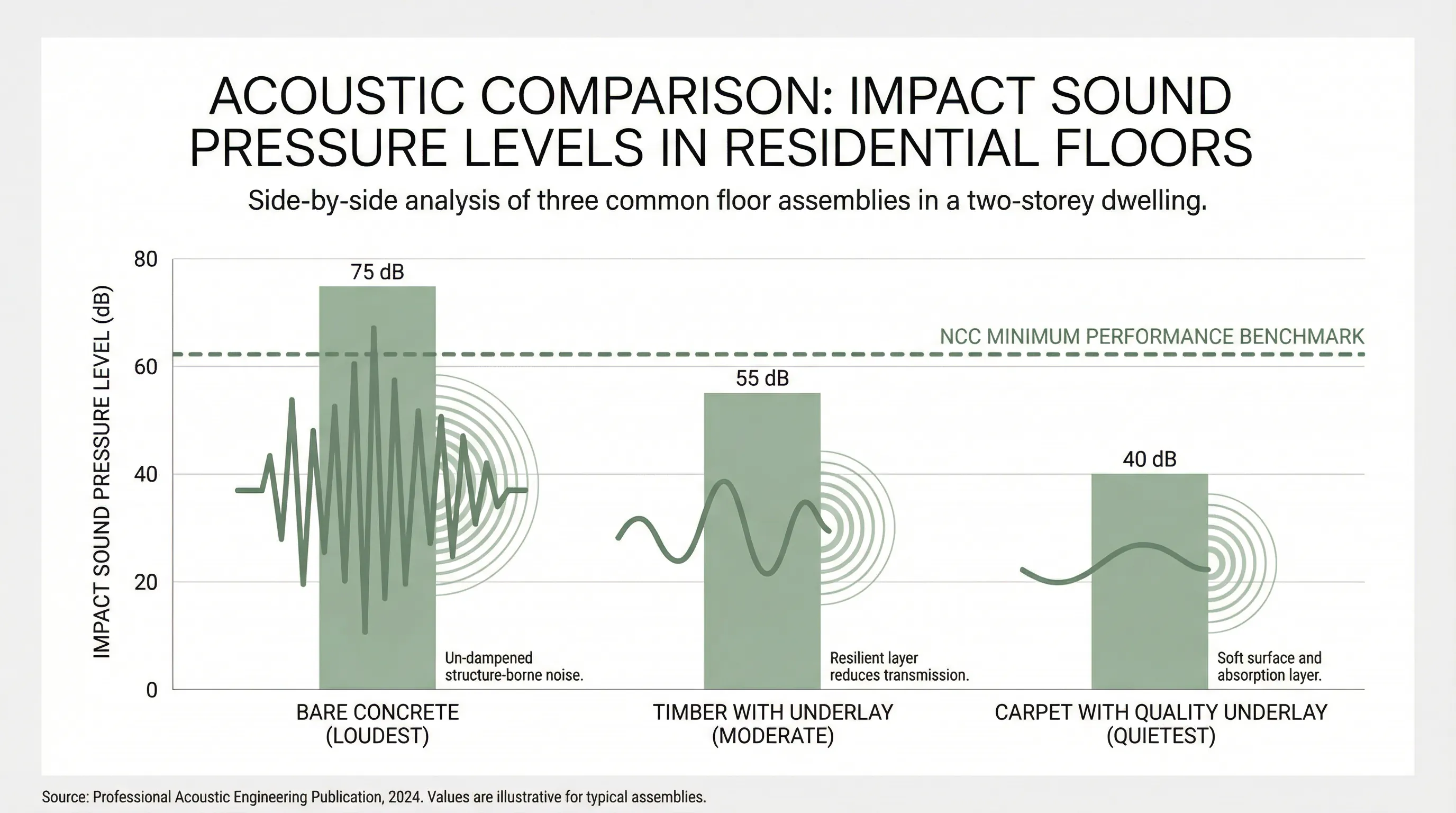
For Class 2 buildings — apartments, units, and multi-residential dwellings governed by NCC Volume One — the acoustic requirements under Section F5 mandate floor-ceiling assemblies achieving a minimum AITC (Adapted Impact Transmission Class) ≥ 50 dB. While carpet is not the only means of achieving compliance, it is frequently the most cost-effective and architecturally flexible solution, particularly in retrofit situations where structural modifications to the ceiling below are impractical. The ACCS Environmental Certification Scheme, administered by the Carpet Institute of Australia Limited (CIAL), formally assesses and certifies carpet’s acoustic noise reduction contribution — a specification credential that carries weight in NCC compliance documentation for Class 2 buildings.
The ACCS Environmental Certification: More Than Stars
When specifying carpet for a bedroom, the Australian Carpet Classification Scheme (ACCS) star rating addresses appearance retention performance — how the carpet will look over time. For a bedroom, which typically sees lighter foot traffic than a living area or hallway, a 2–3 star ACCS rating is generally appropriate for the traffic load. But the ACCS Environmental Certification component is equally relevant here: it assesses VOC (volatile organic compound) emissions, acoustic noise reduction, and thermal insulation contribution.
A bedroom is a space where occupants spend eight hours per night in close proximity to the floor covering. Indoor air quality in the sleeping environment is not an incidental consideration — it is a health-relevant specification parameter. Carpet bearing ACCS Environmental Certification meets tested benchmarks for low VOC emissions. Wool carpet goes further: as discussed below, wool actively absorbs VOCs from the indoor environment rather than contributing to them.
The Case for 100% Wool in the Bedroom
No single carpet specification speaks to the bedroom more directly than 100% New Zealand wool, and the argument for it extends across multiple dimensions simultaneously.
Natural Flame Retardance
Wool is a protein fibre — structurally keratin, the same material as human hair — and its combustion behaviour is categorically different from synthetic carpet fibres. Wool does not melt, does not drip burning material, and does not support sustained combustion. When exposed to a flame source, wool chars at the point of contact and self-extinguishes when the ignition source is removed. The ignition temperature of wool (570–600°C) is significantly higher than that of synthetic fibres such as nylon (450°C) or polyester (350°C).
In a bedroom — a space where nightwear, bedding, and reduced alertness during sleep create a specific fire risk profile — wool’s natural flame retardance is not a decorative footnote. It is a meaningful safety characteristic that requires no chemical treatment and does not degrade with age.
Temperature Regulation and Moisture Buffering
Wool fibres are hygroscopic: they absorb and release atmospheric moisture vapour as ambient humidity fluctuates, acting as a passive humidity regulator within the room. A wool carpet can absorb up to 30% of its own weight in moisture vapour without feeling damp to the touch. In the sleeping environment, where body respiration elevates localised humidity through the night, this buffering capacity contributes to the maintenance of a more stable, comfortable microclimate at floor level.
Wool also possesses an inherent exothermic absorption property — it actually generates small amounts of heat as it absorbs moisture from the air. This is not a significant heating contribution, but it reinforces the sensory impression of warmth that wool surfaces impart, distinct from any measured thermal conductivity figure.
Durability and Longevity
The cuticle scale structure of wool fibres provides excellent soil-concealment in addition to mechanical resilience. Fine particulate soil — the dominant soiling agent in residential settings — is captured between fibre scales and held away from the visible pile base until vacuuming dislodges it. This structural soil-hiding means a wool bedroom carpet maintains its visual appearance between cleaning cycles far more effectively than many synthetic alternatives.
Pile Construction for the Bedroom: What to Choose
The choice of pile construction is as consequential as fibre selection and deserves considered attention.
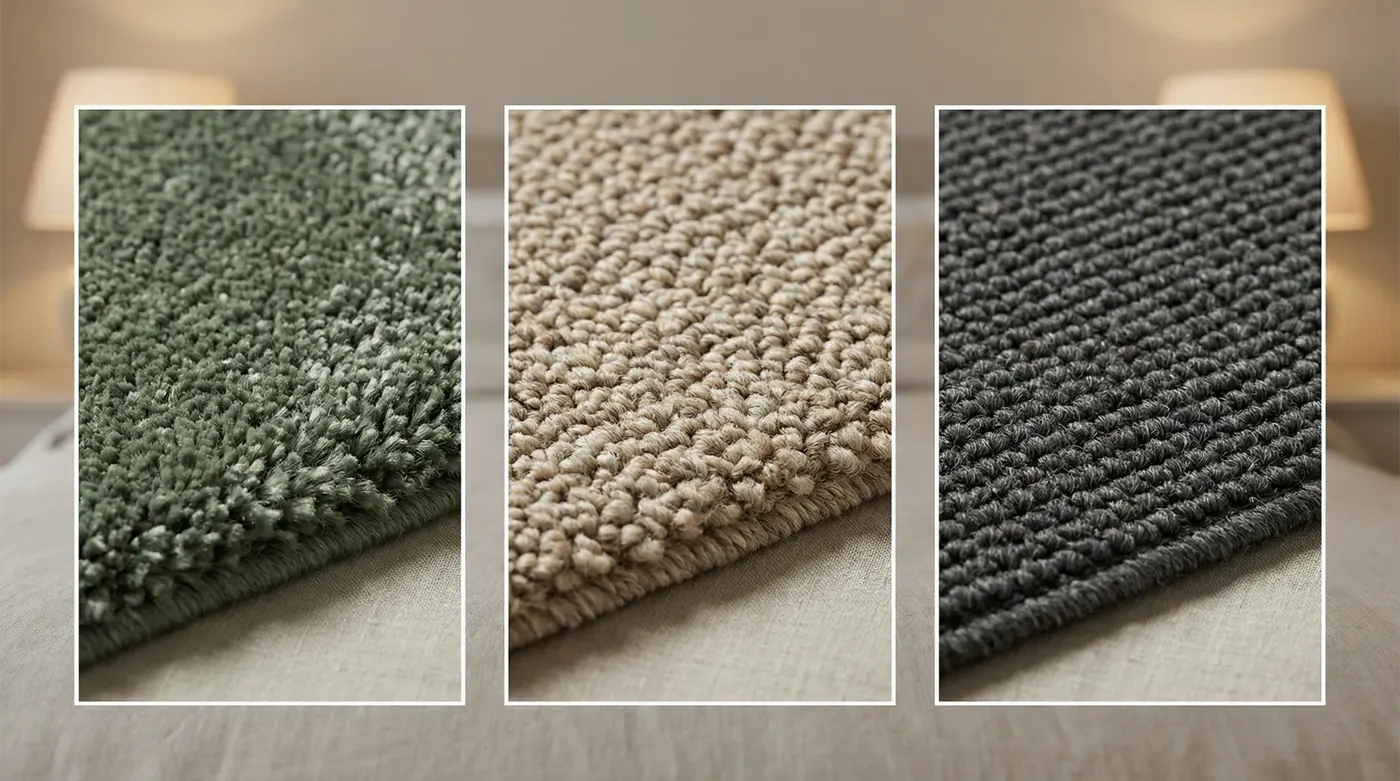
Cut Pile Plush — The Luxury Hotel Effect
Cut pile plush presents a uniform, velvet-like surface with maximum visual softness. The pile filaments are cut to a consistent height and stand upright, creating the dense, lustrous appearance associated with premium hotel suites. It is supremely soft underfoot and provides a genuinely luxurious visual impression.
The caveat: plush pile shows shading — directional variation in reflected light caused by slight pile lean in different directions. In practice, this manifests as lighter and darker patches that shift as viewing angles change. This is not a defect; it is an inherent characteristic of the construction. For clients who prefer a completely uniform surface appearance, plush pile requires the management of expectations or an alternative pile structure.
Cut Pile Twist — Practical Performance with Warmth
Cut pile twist fibres are tightly twisted before tufting, creating a textured, heather-like surface that is considerably more forgiving of foot traffic patterns and directional light. The twisted structure conceals footprints, pile lean variations, and minor soiling between cleaning cycles — making it the most pragmatic specification for a bedroom that receives regular use. Twist pile in a quality wool or wool-blend product is the high-performance design choice: it performs better than plush under use while retaining genuine visual warmth.
Wool Loop Pile — Contemporary Texture
Loop pile constructions, where the pile yarn forms continuous loops rather than cut ends, produce a clean, tailored surface with a distinctly contemporary character. Level loop pile in a quality wool yarn provides excellent pile height retention (loops are structurally more resistant to crushing than cut pile) and a sophisticated, architectural texture suited to pared-back modern interiors. The textural quality of wool loop pile at macro scale — the subtle variation in yarn colour inherent to natural fibre — gives it a visual depth that synthetic loop products cannot fully replicate.
Pile Height and Its Implications
Pile height (measured in millimetres from backing to pile tip) directly affects both tactile experience and maintenance requirements.
Shorter pile (6–10mm): More durable, easier to vacuum thoroughly, better performance under furniture, suitable for contemporary interiors where a clean profile is desired. Less tactilely immersive underfoot.
Medium pile (10–14mm): The sweet spot for most bedroom applications — sufficient pile depth for genuine tactile warmth without the vacuum and maintenance demands of longer constructions.
Longer pile (14mm+): Maximum tactile softness and visual luxury. Higher maintenance demands: requires more thorough vacuuming to prevent fibre consolidation at the pile base, and furniture legs should be fitted with appropriate cups to prevent permanent pile compression.
Dust Mite Management: The Evidence-Based Approach
The perception that carpet harbours dust mite allergens more problematically than hard flooring is not straightforwardly supported by the research literature. Studies comparing allergen levels in homes with carpet versus hard floors show mixed and often counterintuitive results: hard floors do not eliminate allergen loads — they frequently simply redistribute them into the air column during activity, where they remain suspended in the breathing zone for longer than they do when settled in carpet pile.
The appropriate management protocol for bedrooms with carpet is:
- Regular vacuuming — minimum twice weekly — using a vacuum with a sealed HEPA filtration system that captures fine particles rather than re-suspending them
- Annual or biannual hot-water extraction cleaning to extract deep-seated particulates and reset the pile
- Adequate ventilation — maintaining indoor relative humidity below 70% inhibits dust mite population, as mites require humidity above this threshold for survival
- Wool specification — wool’s hygroscopic properties help regulate localised humidity at the floor surface, and its natural chemistry is inhospitable to mite colonisation relative to synthetic fibres
With this maintenance protocol, carpet in the bedroom is not a liability for allergy sufferers. For households with significant respiratory sensitivities, ACCS Environmental Certified wool carpet is a considered, evidence-informed specification.
Colour Psychology for the Sleeping Environment
The bedroom has a specific psychological mandate: it must support the transition from active to restful states, encourage sleep onset, and signal sanctuary. Colour psychology has well-documented implications for this.
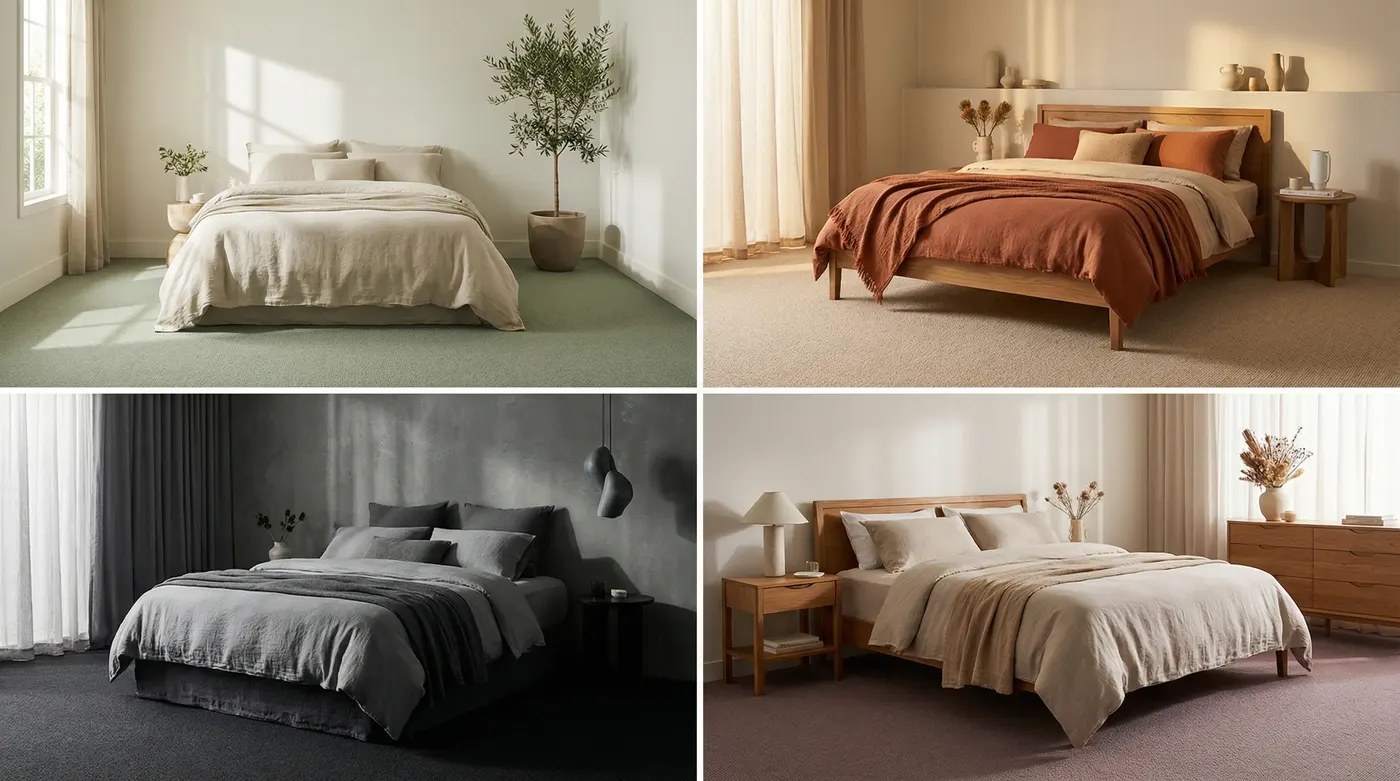
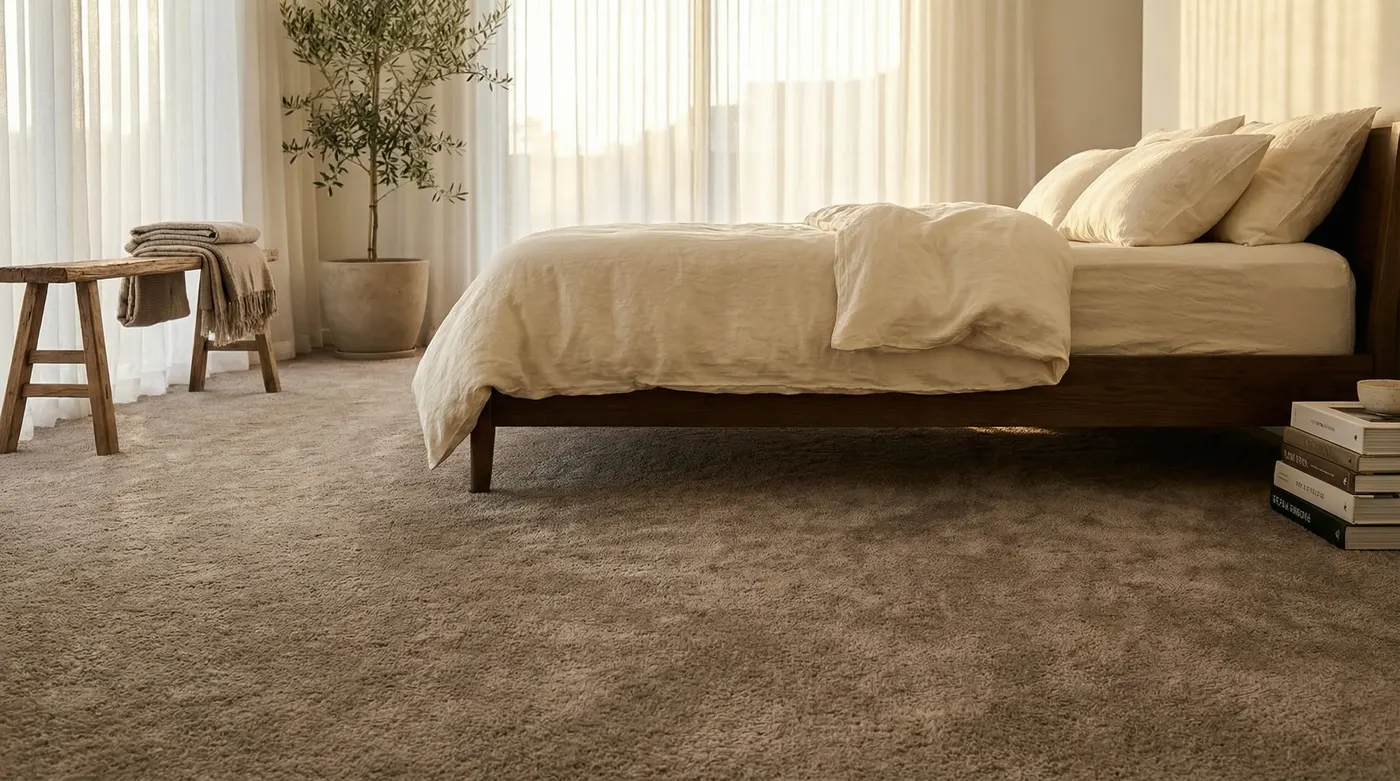
Muted neutrals — warm oatmeal, stone, greige: The most universally effective bedroom palette. These tones neither stimulate nor dominate; they create the visual quiet that allows the eye to settle and the nervous system to downregulate. Paired with natural timber joinery and linen bedding, warm neutrals in a medium-pile wool produce a bedroom that feels both considered and effortless.
Earthy sages and organic greens: Melbourne’s current leading trend direction, grounded in biophilic design principles. Soft green tones at low saturation levels create a connection to natural environments associated with calm and restoration. In a wool carpet, these tones carry additional visual depth due to natural fibre variation.
Deeper tones — charcoal, slate, moody navy, deep terracotta: The cocoon effect. Deep floor tones create a sense of enclosure that is psychologically associated with safety and calm — the same principle that makes low-ceilinged reading rooms feel intimate rather than claustrophobic. In a master bedroom with appropriate natural light and pale walls, a deep carpet creates one of the most dramatically beautiful domestic interiors achievable.
Avoid high-saturation colours in the bedroom. Intense primary tones create visual stimulation at a neurological level that is counterproductive to rest. The bedroom calls for restraint in colour, richness in texture.
Styling: Connecting Carpet to the Room
Successful bedroom design treats the carpet not as a backdrop but as the anchoring element from which all other decisions radiate.
Bed linen: The carpet colour sets the temperature of the room; bed linen completes it. A warm oatmeal carpet pairs beautifully with cool-white linen, creating a contrast that reads as sophisticated simplicity. A deeper sage carpet asks for layered textures in natural tones — unbleached cotton, washed linen, earthy ceramics on the bedside.
Curtains and window treatments: For a harmonious room, draw the curtain fabric from either the carpet undertone or the wall tone — never from a third colour source. Sheer linen curtains in a bone or warm white work across virtually every carpet palette and allow daylight to animate the floor surface.
Wall colour: The most common mistake in bedroom colour is choosing wall colour before carpet. The correct sequence runs in the opposite direction: select the carpet, then the bedding, then the walls. Walls in a bedroom are the lightest element; they should reflect and amplify the palette established by the heavier, ground-plane elements.
Furniture and joinery: Timber bedheads, bedside tables, and wardrobing should relate to the carpet’s undertone. Warm carpet tones (amber, honey, oatmeal) are beautifully served by natural oak or walnut joinery. Cool-undertone carpets (ash, slate, sage) pair well with painted joinery, raw linen upholstery, or blackened steel hardware.
The case for carpet in the bedroom is not one single argument — it is a convergence of thermal physics, acoustic engineering, colour psychology, fire safety, and sensory experience. Each of these dimensions points in the same direction. The bedroom is the most intimate space in any home: a place of rest, recovery, and private ritual. It deserves a floor covering that was designed, at every level of its performance, for human comfort.
Frequently asked questions
How much does bedroom carpet cost in Melbourne?
For 2026, expect $30-$90/m² for solution-dyed nylon, $50-$90/m² for Triexta, and $50-$140/m² for wool — carpet only. A typical primary bedroom of 16-20m² will sit around $1,200-$2,800 supplied and installed including underlay, depending on fibre and range. Get a fixed quote at the showroom — modern estimating software lets us price your specific room while you're standing in front of the sample.
What's the best carpet for a kids' bedroom?
Triexta is the strongest choice for kids' bedrooms. Permanent stain resistance handles the spilled juice, the felt-tip mishaps, and the inevitable accidents during toilet training. It's softer than nylon underfoot, which matters when small humans spend half their time on the floor. Cut pile twist construction in a mid-tone colour (warm oatmeal, soft sage, deep grey) hides everyday marks better than light or single-colour plush. Avoid white, very pale, and very dark plush in kids' rooms — they show every mark.
Can you install carpet over an existing hardwood floor?
Yes. Carpet can be installed over hardwood, engineered timber, hybrid, or laminate without damaging the floor underneath — installers use grippers around the perimeter rather than fixings into the boards. This is a popular choice in Melbourne renovations where homeowners want to preserve the original hardwood for resale value but want bedroom warmth and softness in the meantime. The hardwood stays sound; remove the carpet years later and the timber is unchanged.
Is carpet a problem for allergies and asthma?
Not when specified and maintained correctly. Studies comparing allergen levels in homes with carpet vs hard flooring consistently find that wool carpet with a sealed-HEPA vacuum protocol performs comparably to hard floors for asthma sufferers. Wool's natural lanolin coating actually traps allergens on the fibre surface where vacuuming removes them, rather than letting them re-suspend in the air. The National Asthma Council's Sensitive Choice programme certifies several wool ranges. The mistake is dense low-pile synthetic carpet without proper vacuuming — that's where allergen accumulation becomes a problem.
What carpet brands does The Flooring Centre stock for bedrooms?
The full Godfrey Hirst and Hycraft wool ranges (Geelong-made), the entire Godfrey Hirst Triexta collection (the only Australian-made Triexta), Victoria Carpets and Quest (Dandenong-made), and EC Carpets (Adelaide-made and Australian-owned). All available with samples to take home, and all with Melbourne-local technical support and warranty paths. See our full guide to Australian carpet brands for the detailed breakdown.
How long does a quality bedroom carpet last?
A premium 100% wool carpet in a primary bedroom typically lasts 25-40 years — bedrooms see less traffic than living areas, and a quality wool fibre ages exceptionally well. Triexta in the same room will give 20-30 years. Solution-dyed nylon 15-25. Polyester 8-15. The biggest determinants of lifespan are underlay quality (a 10mm 120kg/m³ underlay can extend carpet life by 25-40%), regular vacuuming, and prompt spot treatment of spills. The carpet usually outlasts the decor preferences that motivated its selection.
Should the bedroom carpet match the rest of the house?
Not necessarily. A bedroom is psychologically distinct from living areas — it has a different colour temperature, a different traffic profile, and a different sensory mandate. Many of our most successful Melbourne projects pair hardwood through the living/dining/kitchen with a different fibre and tone in the bedrooms (warm wool plush, deep sage cut pile, oatmeal Triexta). The transition at the bedroom doorway should be deliberate — a flush threshold, complementary undertones — but the materials don't need to match. Different rooms, different jobs.
Visit a TFC showroom for samples
The single best way to choose bedroom carpet is to feel five different fibres under your bare feet on the showroom floor. Wool feels distinctly different from Triexta, which feels different again from solution-dyed nylon. Until you've stood on each, the spec sheets are abstract.
Nunawading — 341-343 Whitehorse Road, Nunawading VIC 3131. Open seven days. (03) 9894 4688.
Hawthorn East — 620-622 Burwood Road, Hawthorn East VIC 3123. Mon-Sat. (03) 9696 9998.
Bring a measurement, a wall-colour sample, or a phone photo of the room — we'll do the rest. Samples are available to take home overnight.
Further reading: Wool vs synthetic carpet · Triexta carpet explained · The complete carpet fibre guide · Flooring for allergies and asthma.
Published by The Flooring Centre — Melbourne's premium carpet and flooring superstores. Visit our Nunawading and Hawthorn showrooms.