By The Flooring Centre Technical Team
Carpet underlay is the most consequential and least understood component in a flooring system. Most homeowners spend considerable time selecting the carpet — comparing textures, weighing pile types, deliberating between colours — and then treat the underlay as an afterthought. Something cheap from the hardware store. Whatever the installer has on the truck.
This carpet underlay guide exists to correct that. Because underlay is not just padding. It is not merely the soft layer that makes a floor feel more comfortable underfoot, though it does that. It is a multi-functional engineering layer that directly affects acoustic performance, thermal comfort, moisture management, and the operational lifespan of the finished floor above it.
And within underlay, the most misunderstood variable is density. Thickness is not the measure of quality. Density is. A thicker underlay at low density will underperform — and fail earlier — than a thinner underlay at high density. Understanding this distinction is the single most valuable thing you can take from this guide — and it is the reason we specify the PureLay (purelay) range across almost every carpet installation we deliver.
Quick answer
The two specifications that actually determine underlay performance are density (kg/m³) and thickness (mm). For most Australian residential carpet, the right choice is a 10-11mm rebond foam underlay at 100-120kg/m³ density. Higher density extends carpet life dramatically; thicker than 11mm undermines click-lock-tested carpet warranties and creates a spongy, unstable feel.
What underlay actually does: extends carpet life by 25-40% (the foam takes the compression damage that would otherwise crush the carpet pile), absorbs impact noise (critical in two-storey homes and apartments), provides thermal insulation, and improves walking comfort. What it doesn't do: turn cheap carpet into premium carpet. The full breakdown of foam types, density ratings, acoustic specs and which underlay matches which carpet construction is below.
Dunlop Carpet Underlay vs PureLay: How the Ranges Compare
Dunlop is the legacy household name in Australian carpet underlay — the brand most homeowners ask for by name because it is what their parents had under their carpet. The Dunlop range is sound, manufactured to Australian standards, and stocked widely. PureLay is the premium specification we developed because the Dunlop product range, while reliable, does not push the density ceiling as high as a modern bedroom and family-area floor system can benefit from. The two ranges map cleanly to each other, with PureLay sitting one density tier above the equivalent Dunlop product:
- Dunlop Red (8mm / 70 kg/m³) — the entry-point residential rebond. PureLay equivalent: Comfort (8mm / 70 kg/m³), same thickness and density but with PureLay's PureProtect™ moisture barrier and PureFlat™ surface technology included as standard.
- Dunlop Green (10mm / 70 kg/m³) — the bedroom-and-living-area mid-tier. PureLay equivalent: Luxe (10mm / 80 kg/m³), the density tier above for noticeably better long-term carpet pile retention.
- Dunlop Ultimate Gold (10mm / 120 kg/m³) — the flagship Dunlop product. PureLay equivalent: Serenity (10mm / 120 kg/m³), same density tier but in 20 linear metre rolls (Dunlop is 15LM), useful for large continuous specifications.
When we recommend Dunlop: a known, reliable specification at a sharper price point — typically when budget is the binding constraint or when the homeowner has a long-standing brand preference. When we recommend PureLay: the room is a primary bedroom, family room, or any space where the carpet will be lived on for 15-25 years — the density step from 70 kg/m³ (Dunlop Red/Green) to 95-120 kg/m³ (PureLay Cloud/Serenity) is the single largest performance lever in the entire carpet system. The carpet itself will look better for longer.
For the full PureLay range and the engineering behind it, see purelay.au.
Carpet Underlay Density Explained: Why kg/m³ Matters More Than Millimetres
When most people think of premium underlay for carpet, they picture a thick, plush layer — something that feels generous underfoot. This instinct is understandable but misleading. Carpet underlay thickness alone tells you nothing meaningful about how the product will perform over the years of use that follow installation.
Carpet underlay density — measured in kilograms per cubic metre (kg/m³) — is the correct measure of quality. Density describes how much material is packed into a given volume of foam. A high-density foam resists compression under repeated load, maintains its structure over time, and continues to support the carpet pile through years of foot traffic. A low-density foam compresses quickly, flattens in high-traffic areas, and loses its cushioning and acoustic properties within a few years.
The practical consequence of this is significant: an 8mm underlay at 120 kg/m³ will outperform a 10mm underlay at 60 kg/m³ in every meaningful category — durability, acoustic performance, appearance retention, and carpet life extension. The thinner, denser product is simply the better underlay.
So to answer the question directly: is thicker underlay better for carpet? No — not on its own. A thick underlay at low density is a budget product with a generous profile. Always ask for the density figure alongside the thickness.
What We Recommend: Four Density Options That Cover 99% of Homes
At The Flooring Centre, we've narrowed the field to four foam underlay specifications that cover virtually every residential carpet installation. These are the products we recommend across our Nunawading and Hawthorn East showrooms — each chosen for a specific balance of density, thickness, and performance:
- 8mm / 70 kg/m³ — Our reliable everyday option. Solid comfort for bedrooms and low-traffic spaces where softness is appreciated but heavy foot traffic isn't a concern. A genuine quality entry point.
- 10mm / 80 kg/m³ — The popular all-rounder. Increased thickness adds warmth and cushion, while the moderate density handles regular family traffic well. A strong choice for living rooms and open-plan areas.
- 9mm / 95 kg/m³ — Where density starts to make a real difference. The higher kg/m³ rating means noticeably better durability and acoustic performance, even in a slightly thinner profile. Excellent for family homes with kids and pets.
- 10mm / 120 kg/m³ — The premium specification. Maximum thickness combined with high density delivers the best durability, acoustic insulation, and comfort available in residential foam underlay. This is what we specify for high-traffic areas, premium homes, and multi-storey acoustic compliance. It will extend your carpet's presentable life by years.
On what thickness carpet underlay you need: the residential standard runs from 8mm (standard), through 9mm (enhanced), to 10mm (premium feel). Where thickness is combined with high density — a 10mm product at 120 kg/m³, for example — the result is genuinely excellent underlay. But a 10mm product at 60 kg/m³ is not a premium underlay. It is a budget underlay in a thick format, and it will behave accordingly.
Always ask for both specifications — thickness and density in kg/m³. If a supplier or installer can only tell you the thickness, that is a signal to ask harder questions.
The Five Functions of Underlay
Whether beneath carpet or hard flooring, a quality underlay performs five distinct functions simultaneously. The relative importance of each function shifts depending on the floor type, but all five matter in every installation.
1. Acoustic Insulation
In a multi-storey building, the floor you walk on is also the ceiling of the apartment, unit, or room below. Every footfall, dragged chair, dropped object, or running child generates impact noise that transmits through the structural slab and is heard — often with startling clarity — by the occupant beneath.
Acoustic underlay for carpet attenuates this impact noise by absorbing and dissipating the mechanical energy before it transmits into the structure. The requirement for multi-storey residential settings is to provide an overall rating of less than LnTW 62. The lower the better. In practical terms, acoustic underlay carpet performance is directly tied to foam density — a point the LnTW rating alone will not tell you.
For carpet installations, quality underlay meets and exceeds this requirement in almost all cases. The key variable is density: a denser foam absorbs impact energy more effectively and maintains that acoustic underlay performance over time, whereas a low-density foam loses its properties as it compresses.
For hard flooring installations, acoustic performance depends on the density and composition of the underlay combined with the floor type being used.
2. Thermal Insulation
Underlay acts as a thermal buffer between the cold mass of a concrete slab and the living surface above it. In Melbourne, concrete slabs can reach surface temperatures as low as 8–12°C in winter, even in heated homes. Without adequate underlay, the floor surface becomes a heat sink — drawing warmth from feet and from the room itself.
The thermal performance of underlay is measured by its R-value — thermal resistance in m²·K/W. Higher R-values indicate greater thermal insulation. This is especially relevant for carpet underlay for concrete floor installations, where the slab's thermal mass is in direct contact with the underlay.
For hard flooring installations with underfloor heating systems, underlay selection becomes a specific engineering question. The underlay must have a low enough R-value to allow heat transfer upward while still providing acoustic and moisture protection. Always consult the heating system manufacturer's specifications and remember that only hydronic heating is permitted under most floors — electrical radiant heating is almost never approved for use beneath floating floor systems.
3. Moisture Management
On ground-floor concrete slab installations — the most common scenario for carpet underlay on a concrete floor in Melbourne — residual moisture vapour migrating upward through the slab is a persistent concern. Selecting the right carpet underlay for a concrete floor means accounting for this vapour risk, not just comfort and density. Without adequate moisture management, this vapour can cause mould growth beneath carpet, degrade adhesive bonds, promote bacterial colonisation, and create odour problems that are expensive and disruptive to remediate.
For hard flooring underlay — beneath engineered timber or laminate — a dedicated moisture barrier system remains best practice. Most quality hard flooring underlays include an integrated vapour barrier, but on new concrete slabs or slabs with elevated moisture readings, a separate polyethylene membrane may be required in addition.
4. Comfort Underfoot
The density and thickness of the underlay directly determine the tactile experience of walking on the finished floor. This is more than a luxury consideration — it affects fatigue during prolonged standing (kitchen preparation, ironing, home office work) and the perceived warmth and quality of the installation.
This is particularly significant for:
- Carpet installations: Underlay is the primary determinant of how a carpet feels underfoot. The same carpet installed on budget low-density underlay versus quality dense foam will feel like two entirely different products.
- Floating hard floors: While the underlay beneath a floating floor is thinner (typically 2–3mm), its quality still affects the acoustic feedback of each footstep and the perceived solidity of the floor.
- Standing areas: Kitchens, laundries, and home offices benefit significantly from quality underlay — fatigue reduction over hours of standing is measurable and meaningful.
5. Extending Floor Life
This is the function most frequently overlooked and, in long-term cost terms, the most valuable.
A floating floor moves. Every step applies localised compressive and shear forces to the click-lock joints that hold the boards together. Over thousands of daily cycles across years of use, these forces accumulate. Poor underlay — too thin, uneven, or too soft — allows the board to flex excessively at the joints, accelerating wear and eventually causing joint failure, squeaking, and board separation.
Quality underlay distributes these forces more evenly across the board surface and reduces the magnitude of individual joint stress. The performance difference is not theoretical: manufacturers' warranties on floating floors are frequently conditional on the specification and quality of the underlay installed beneath them.
For carpet, the equation is equally compelling. Underlay density acts as a shock absorber, protecting the carpet pile from being crushed, matted, and permanently flattened by foot traffic. A premium-density foam underlay — 10mm at 120 kg/m³ — can extend the presentable life of a carpet by several years compared to a low-density alternative. That return on investment dramatically exceeds the modest additional cost at installation.
Foam Underlay for Carpet: The Current Standard
Foam underlay for carpet is now the overwhelming standard in Australia. The days of alternative materials are effectively over — foam delivers superior acoustic performance, consistent density, and reliable longevity at a price point that makes alternatives difficult to justify.
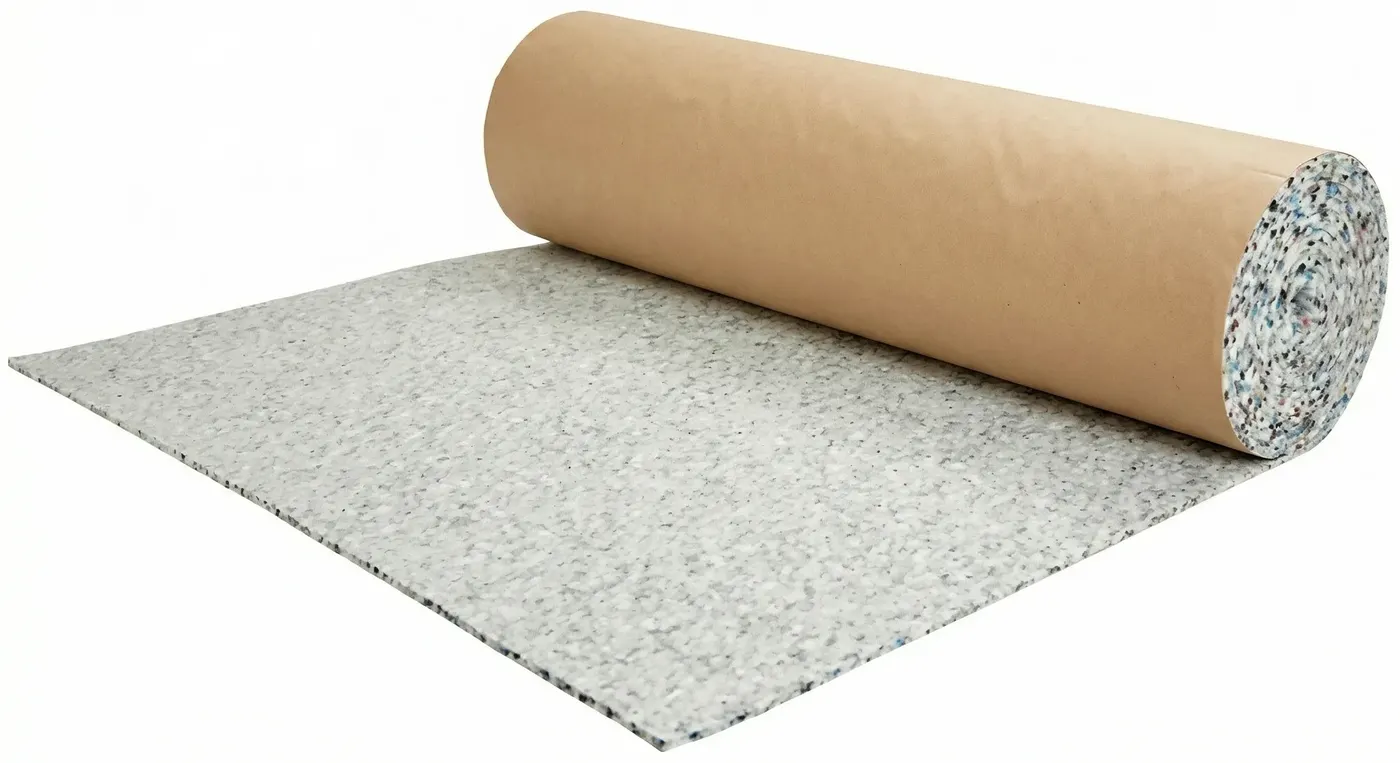
The key variables within the foam category are carpet underlay thickness (typically 8–10mm for residential carpet) and density (measured in kg/m³, with higher density indicating greater durability and support). These two variables together determine every aspect of how the underlay will perform — and as discussed above, density is the more important of the two.
When comparing products, always request both measurements. A product listed only by thickness — '10mm underlay' — tells you nothing about whether it will hold up in a hallway for a decade, or flatten within two years.
How to Choose Carpet Underlay: Room by Room
Knowing how to choose carpet underlay means matching the specification to the actual use of the space. Not all rooms make the same demands on an underlay, and the right product for a bedroom is not necessarily the right product for a hallway or staircase.
Best Carpet Underlay for Bedrooms
Bedrooms are low-traffic environments where comfort underfoot is the primary consideration. The best carpet underlay for bedrooms prioritises a generous, cushioned feel — which makes this the one context where a thicker profile genuinely adds value, provided the density is sufficient to maintain structure.
For bedrooms, our 8mm/70 kg/m³ option provides genuine comfort at a sensible price point. If you want that extra plushness underfoot — especially in a master bedroom — step up to the 10mm/80 kg/m³ for a noticeably softer feel. Either way, bedrooms see less traffic, so density is less critical here than in living areas.
High-Traffic Areas: Living Rooms, Hallways, and Stairs
For living areas, hallways, and carpet underlay for stairs, density is everything. These are the spaces where a budget 50–70 kg/m³ underlay will visibly fail within two to three years — leaving flat, dead foam that provides neither comfort nor acoustic benefit.
In high-traffic zones, we specify a minimum of 9mm/95 kg/m³, and ideally the 10mm/120 kg/m³ for hallways, stairs, and living areas that see constant use. Stairs in particular benefit from the combination of maximum density and thickness — the underlay must resist compression on the bullnose edge where every footstep concentrates force on the same narrow strip.
PureLay: The Premium Carpet Underlay We Specify
At The Flooring Centre we recommend PureLay Premium Carpet Underlay as our preferred specification for almost every carpet installation. PureLay takes a fundamentally different approach to underlay engineering — one that prioritises material purity, acoustic performance and long-term durability over the lowest possible price.
What sets PureLay apart:
- Clean-source foam. Made from new offcuts diverted from controlled furniture production — never post-consumer waste. The source foam has never been in a home, never been exposed to contamination, and retains the original mechanical properties.
- PureProtect™ moisture barrier. An integrated moisture management layer built into the underlay structure. It helps keep the carpet within manufacturer maintenance specs without compromising the underlay itself.
- PureFlat™ textile backing. A woven base layer that prevents stretch during install and delivers a flat, dimensionally stable surface for the carpet to sit on.
- 6 Star Acoustic Rating. Across the entire range, every PureLay product delivers 26–28 dB of impact sound reduction — the highest acoustic certification available.
- 100% recyclable. At end of life the products can be fully recycled, closing the loop on material already made from repurposed foam.
- Australian Standards compliant. All four products meet AS/NZS requirements for carpet underlay.
The PureLay range — four products to match the room
- PureLay Comfort (8mm, 70 kg/m³) — Reliable everyday comfort for standard residential carpet. The quality entry point that still includes every PureLay technology. 3.5 Star comfort rating.
- PureLay Cloud (9mm, 95 kg/m³) — Increased density for improved durability and acoustic performance. The default for living rooms and family areas. 4 Star comfort rating.
- PureLay Luxe (10mm, 80 kg/m³) — Maximum thickness with a softer hand-feel. Designed for bedrooms and low-traffic luxury spaces where underfoot comfort is the priority. 4.5 Star comfort rating.
- PureLay Serenity (10mm, 120 kg/m³) — The flagship. Maximum density paired with maximum thickness for the highest durability, acoustic performance and comfort. Specified for high-traffic areas, premium residences, and multi-storey acoustic compliance. 5 Star comfort rating.
Every PureLay product ships with PureProtect™ and PureFlat™ technologies built in as standard. Rolls are 1.83m wide — 15 linear metres for Comfort, Cloud and Luxe; 20 linear metres for Serenity — compatible with standard residential installation practices.
More on the range and the engineering behind it at purelay.au.
8mm Carpet Underlay: When 8mm Is the Right Choice (PureLay Comfort)
8mm carpet underlay is the standard residential entry point. It is the thickness most installers default to when a homeowner has not specified anything more, and it is the minimum we will install under any quality carpet. At 8mm the underlay still has enough depth to provide a meaningful acoustic break between the carpet and the subfloor, and enough cushion to protect the carpet pile from being crushed by foot traffic in the early years of the floor's life.
What matters at 8mm is what is happening inside those eight millimetres. Low-density 8mm foam — the kind you find packaged with budget carpet — will compress permanently within a year or two of installation, leaving the carpet sitting on what is effectively a thin sheet of flat plastic. High-density 8mm foam holds its structure for the full life of the carpet.
Our 8mm recommendation: PureLay Comfort — 8mm at 70 kg/m³. The quality entry point in the PureLay range, with the full PureProtect™ moisture barrier and PureFlat™ surface technology included as standard. Choose 8mm Comfort for hallways, secondary bedrooms, formal lounges, and any room where a balance of price and longevity is the priority. 3.5 Star comfort rating, 6 Star acoustic rating, 26–28 dB impact sound reduction.
9mm Carpet Underlay: The Living-Area Default (PureLay Cloud)
9mm carpet underlay sits at the most strategically useful point in the range. The extra millimetre over 8mm is not, on its own, the point — what matters is that 9mm allows manufacturers to specify a meaningfully higher density without making the underlay so thick that it becomes difficult to install around door clearances and transitions.
For most family homes, 9mm is the right specification for living rooms, family rooms, and main bedrooms. It gives carpet a noticeably softer footfall than 8mm, extends the cosmetic life of the carpet by holding its pile structure for longer under traffic, and provides genuine acoustic separation between floors in a two-storey home.
Our 9mm recommendation: PureLay Cloud — 9mm at 95 kg/m³. The density jump from Comfort's 70 kg/m³ to Cloud's 95 kg/m³ is the single largest performance step in the range. Choose 9mm Cloud for the rooms your family actually lives in — open-plan lounges, family rooms, master bedrooms. 4 Star comfort rating, 6 Star acoustic rating, 26–28 dB impact sound reduction.
10mm Carpet Underlay: Maximum Performance (PureLay Luxe & Serenity)
10mm carpet underlay is the maximum thickness that should ever be installed in a residential carpet system. Above 10mm the underlay becomes too soft underfoot — the carpet feels unstable and the seams are placed under unnecessary tension. At 10mm, however, the right density delivers the most luxurious underfoot feel a carpet system can produce, and the longest service life.
10mm is also where the specification splits — because the right 10mm underlay depends on whether the priority is comfort or durability. Two rooms in the same house may both need 10mm underlay but for different reasons.
Our 10mm comfort recommendation: PureLay Luxe — 10mm at 80 kg/m³. Maximum thickness paired with a softer, more yielding hand-feel. Choose Luxe for bedrooms where the priority is sinking your feet into something soft when you step out of bed. 4.5 Star comfort rating, 6 Star acoustic rating.
Our 10mm durability recommendation: PureLay Serenity — 10mm at 120 kg/m³. The flagship of the range, and the highest-density residential foam underlay we sell. Choose Serenity for high-traffic family areas, premium residences, stairs, and any installation where multi-storey acoustic compliance matters. 5 Star comfort rating, 6 Star acoustic rating, the full PureProtect™ and PureFlat™ technology stack. Serenity is also the only PureLay product sold in 20 linear metre rolls (the rest of the range is 15 LM) — useful for larger continuous specifications.
Underlay and the ACCS Carpet Rating System
The Australian Carpet Classification Scheme (ACCS), administered by the Carpet Institute of Australia Limited (CIAL), rates carpet performance under a star system that underpins residential warranty claims. What is less widely understood is that the underlay specification directly influences whether the carpet performs to the level its ACCS rating promises.
In a residential installation, the underlay affects carpet performance in two primary ways:
- Appearance retention: A quality, appropriately dense underlay provides the uniform support that prevents premature pile crushing, matting, and tracking — the most common causes of warranty claims.
- Dimensional stability: Underlay that shifts, compresses unevenly, or degrades over time creates localised areas of wear that accelerate the carpet's visual decline.
A 4-star ACCS carpet installed on a 10mm/120 kg/m³ underlay will retain its appearance significantly longer than the same carpet on cheap, low-density foam — often by years. The underlay does not change the carpet's star rating, but it determines whether the carpet lives up to it.
This is a critical point for anyone making a long-term flooring investment: you can install a quality carpet and undermine it entirely with inadequate underlay. The specification decision is not about the carpet alone.
Hard Flooring Underlay: Engineered Timber, Laminate & Hybrid
Underlay beneath hard floating floors — engineered timber, laminate, and hybrid plank — serves a fundamentally different purpose to carpet underlay. Where carpet underlay provides cushioning and pile protection, hard flooring underlay must deliver moisture management, acoustic dampening, joint protection, and dimensional stability in a much thinner profile.
Underlay for floating floors is typically 2–3mm thick, compared to the 8–10mm common in carpet applications. Thickness is deliberately minimal to avoid creating excessive flex in the floating floor system, which would stress click-lock joints and cause premature failure. Here, density remains the quality indicator — but the performance requirements are different, and the products are purpose-built for each floor type.
Engineered Timber Underlay and Laminate Underlay Guide
For engineered timber and laminate floating floor installations, the standard underlay is a closed-cell foam — typically a cross-linked polyethylene or similar dense foam, 2–3mm thick, with an integrated vapour barrier on the underside.
This underlay must balance three competing requirements:
- Moisture protection: The integrated vapour barrier prevents moisture migration from the concrete slab into the timber or laminate boards, which would cause swelling, cupping, and delamination.
- Acoustic performance: Dense foam absorbs the hollow tap-tap-tap sound that characterises poorly installed floating floors, and reduces impact noise transmission to rooms below.
- Dimensional stability: The underlay must compress evenly under load and not degrade over time, ensuring the floating floor remains flat and stable across its entire surface.
For installations with underfloor heating, consult the heating system and flooring manufacturer specifications — the underlay's thermal resistance must be compatible with effective heat transfer. Only hydronic underfloor heating is supported, and only with certain products. Ask your consultant for more information if you have underfloor heating.
Hybrid Flooring Underlay: What You Need to Know
Hybrid flooring underlay requirements are distinct from both carpet and timber underlay, and getting this wrong is a common and costly installation error.
Hybrid (SPC — Solid Polymer Core) plank is one of the most popular floor products in Australia today. Many hybrid products ship with a pre-attached underlay bonded to the underside of each plank. Where this is included, an additional separate underlay must not be installed beneath the boards — doubling up creates excessive flex, voids the manufacturer's warranty, and accelerates joint failure. Always check the manufacturer's installation guide before specifying additional underlay.
Hybrid floors that require separate underlay typically use one of the following:
- EVA (Ethylene-Vinyl Acetate) foam: A dense, resilient foam that provides good acoustic dampening and moisture resistance. EVA is the most commonly specified separate underlay for hybrid installations and offers a reliable balance of performance and cost.
- IXPE (Irradiation Cross-Linked Polyethylene) foam: A high-performance closed-cell foam with excellent moisture resistance and consistent density. IXPE is thinner and denser than EVA, making it ideal for installations where minimal height build-up is important.
- Cork underlay: Occasionally used beneath hybrid flooring, but not recommended. Cork is a natural material that absorbs moisture, is prone to compression over time, and provides inconsistent acoustic performance compared to engineered foam alternatives. It can also develop mould in high-moisture environments — precisely the conditions most common on ground-floor concrete slabs.
Because hybrid floors are water-resistant, not waterproof, a separate moisture barrier must be rolled out onto all subfloors prior to installation. This is primarily designed to prevent moisture vapour rising into the product and causing performance degradation over time.
Critical specification note: Where boards include pre-attached underlay, an additional separate underlay layer must not be installed on top. The combined thickness creates a spongy, unstable surface that accelerates click-lock joint failure. If additional acoustic performance is required — as is common in NCC-regulated multi-storey installations — the solution is an acoustic mat or membrane engineered to work in conjunction with the pre-attached pad, not a second layer of standard underlay.
How to Choose Carpet Underlay: A Practical Checklist
When selecting underlay for any flooring project, these are the key questions to answer. This is how our consultants in our carpet underlay Melbourne showrooms approach every specification:
- What floor type? Carpet underlay and hard flooring underlay are not interchangeable. The product category must match the floor.
- What density? For carpet underlay, our four go-to options are 8mm/70, 10mm/80, 9mm/95, and 10mm/120 kg/m³. Choose based on traffic level and comfort priority. Higher density always means better durability.
- What thickness carpet underlay do I need? For carpet, 8–10mm is the residential standard — choose based on comfort preference, with the understanding that density matters more. For hard flooring, 2–3mm is typical; more than this can create unwanted flex.
- Is there pre-attached underlay? For hybrid flooring, always check the manufacturer's specification before adding a separate underlay layer.
- Is moisture a factor? For ground-floor slab installations — particularly carpet underlay on a concrete floor — ensure the underlay is paired with appropriate moisture management.
- Are there acoustic compliance requirements? Multi-storey installations under the NCC require specific LnTW ratings. Confirm that the underlay and floor combination achieves the required performance before installation.
Final Thought
The floor you see is only half the story. The invisible layer beneath it — the one that manages moisture, absorbs sound, retains warmth, and protects the investment above — is what separates a floor that performs from one that merely looks right on the day it is installed.
The most important thing to remember from this carpet underlay guide: density is the quality indicator, not thickness. A 10mm underlay sounds impressive. An 8mm underlay at 120 kg/m³ actually performs.
At The Flooring Centre, we specify underlay as part of every flooring solution — not as an add-on. Our team at our Nunawading showroom (open 7 days) and Hawthorn East showroom (open Monday to Saturday) can guide you to the best carpet underlay for your floor, your building type, and your performance requirements.
Frequently Asked Questions
What is the best carpet underlay specification for most Australian homes?
For most Australian residential carpet, the right choice is a 10mm rebond foam underlay at 120kg/m³ density. Higher density extends carpet life; thicker underlay can undermine click-lock-tested carpet warranties and feel spongy.
Is thicker carpet underlay better?
No. Thickness is not the measure of quality. Density is. A thicker underlay at low density will underperform — and fail earlier — than a thinner underlay at high density.
What underlay do you specify?
We specify the PureLay range across almost every carpet installation. PureLay Comfort is the 8mm option, PureLay Cloud is the 9mm living-area default, and PureLay Luxe and Serenity are the 10mm maximum-performance options.
What does carpet underlay actually do?
Underlay is a multi-functional engineering layer. It affects acoustic performance, thermal comfort, moisture management, underfoot comfort, and the operational lifespan of the carpet above it.
Published by The Flooring Centre — Melbourne's premium carpet and flooring superstores. Visit our Nunawading and Hawthorn showrooms.