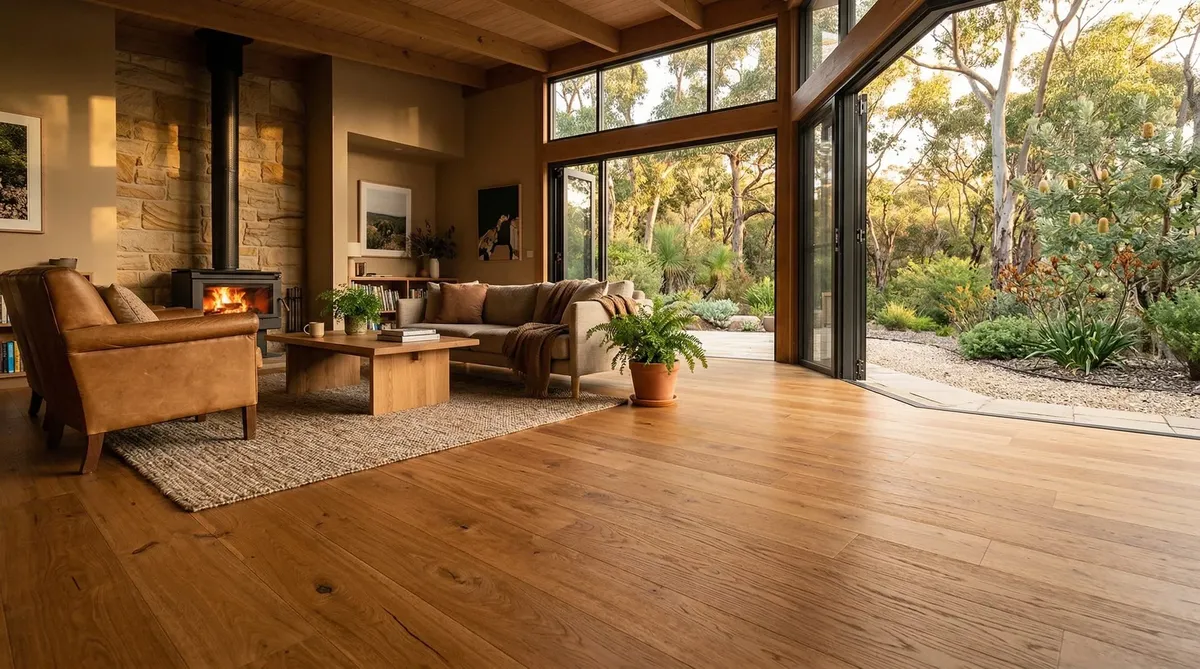
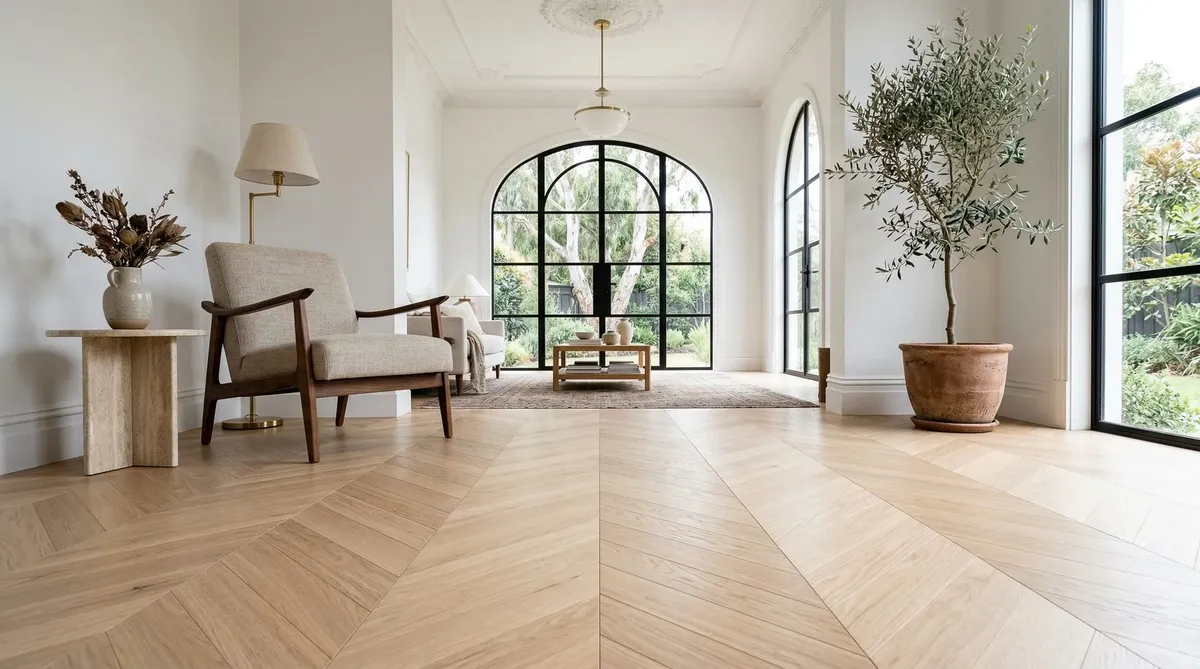
| Attribute | Prime | Select | Natural | Feature |
|---|---|---|---|---|
| Knot frequency | Very few | Occasional | Frequent | Very frequent |
| Knot size | Very small | Small–medium | Small–large | Medium–large |
| Gum veins | Minimal | Fine, occasional | Visible, varied | Bold, prominent |
| Surface checks | None–negligible | Fine, occasional | Visible | Expected |
| Sapwood | Very limited | Moderate | Prominent | Very prominent |
| Colour variation | Very low | Moderate | High | Very high |
| Industrial filler | Rare | Occasionally | Typical | Standard |
| Interior style | Minimalist, contemporary | Transitional, classic | Rustic, coastal, eclectic | Industrial, farmhouse, artisan |
| Best Melbourne project types | Inner-city apartment, gallery home | Renovated terrace, executive family home | Coastal retreat, contemporary rural | Industrial conversion, heritage restoration |
By The Flooring Centre Technical Team
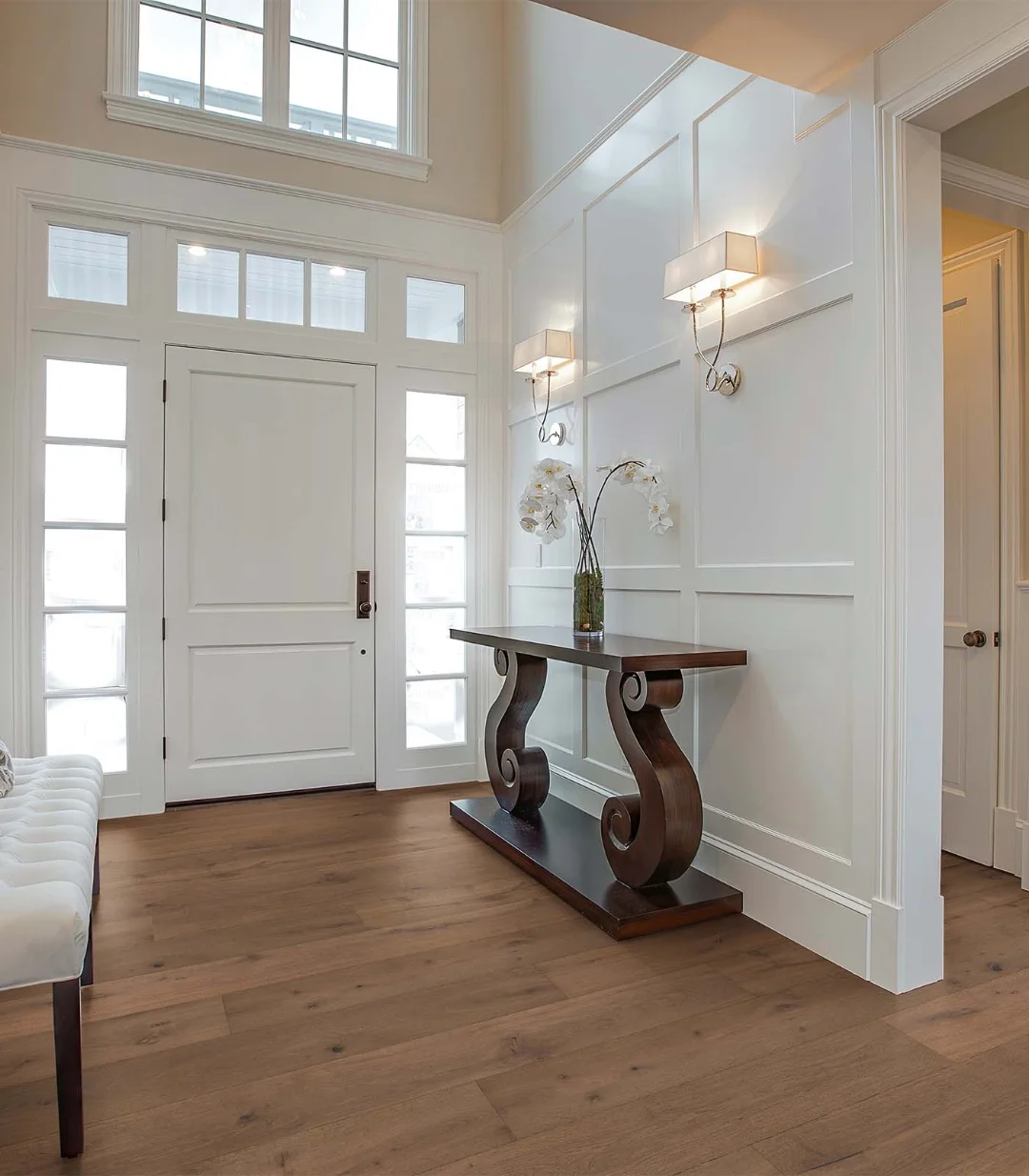
When a client walks into our showroom and asks for “the nicest hardwood we have,” the conversation that follows is always more nuanced than the question implies. In the world of engineered and solid hardwood flooring, “nicest” is entirely subjective — and that is precisely the point. Timber grading is not a quality hierarchy. It is an aesthetic classification system that allows architects, designers, and homeowners to select flooring that aligns with their interior vision, not a universal standard of superiority.
Understanding how grading works — and why the most characterful grades are often the most sought-after by high-end design studios — is the difference between making an informed floor selection and leaving money on the table.
What Is Hardwood Grading?
Grading in hardwood flooring refers to the sorting of planks based on their visual characteristics: the presence and size of knots, the distribution of gum veins and mineral streaks, the ratio of heartwood to sapwood, the incidence of fine surface checks, and the degree of colour variation between planks.
These characteristics are determined by the individual tree’s growth story — its age, the stresses it experienced, the nutrients available at different growth rings, and its position within the log when milled. A knot is not a flaw; it is a record of where a branch once grew. A gum vein is not a defect; it is a record of the tree’s response to injury or insect activity. Feature-grade timber is not inferior timber — it is timber that has lived more visibly.
In commercial and residential practice, four primary grades dominate the Australian market:
- Prime — the cleanest, most refined expression of the species
- Select — a balanced blend of refinement and natural character
- Natural — expressive, individual, rich in organic detail
- Feature — bold, raw, maximally characterful
The European Standard: EN 13489 and EN 14342
The international benchmark for grading appearance in engineered wood flooring is EN 13489:2023 (Multi-layer parquet elements — characteristics, evaluation of conformity and marking) alongside EN 14342 (Wood flooring and parquet — characteristics, evaluation of conformity and marking).
Under these standards, appearance classes are defined by parameters including:
- Knots: Maximum permissible diameter, frequency per plank, whether sound or unsound
- Gum veins and resin pockets: Width and length thresholds
- Sapwood: Allowable percentage of face width
- Colour variation: Classification from uniform (Class A/B) to variable (Class C/D)
- Surface checks: Permitted widths and lengths at various grades
- End splits: Maximum permissible lengths
The European framework provides a useful technical scaffolding, but Australian practice frequently diverges from it. Our native hardwood species — Blackbutt, Spotted Gum, Tasmanian Oak — have visual characteristics that don’t always map cleanly onto European appearance class definitions originally developed for Oak, Beech, and Ash. The presence of interlocked grain, distinctive gum veins, and pronounced figure in Australian eucalypts means that grading terminology developed locally has evolved to serve the Australian market’s specific needs.
Australian Standard AS/NZS 2796 (Timber — Hardwood — Sawn and Milled Products) provides the domestic reference framework for hardwood classification, with moisture content verification addressed under AS/NZS 1080.1:2012.
Prime Grade: The Purist’s Canvas
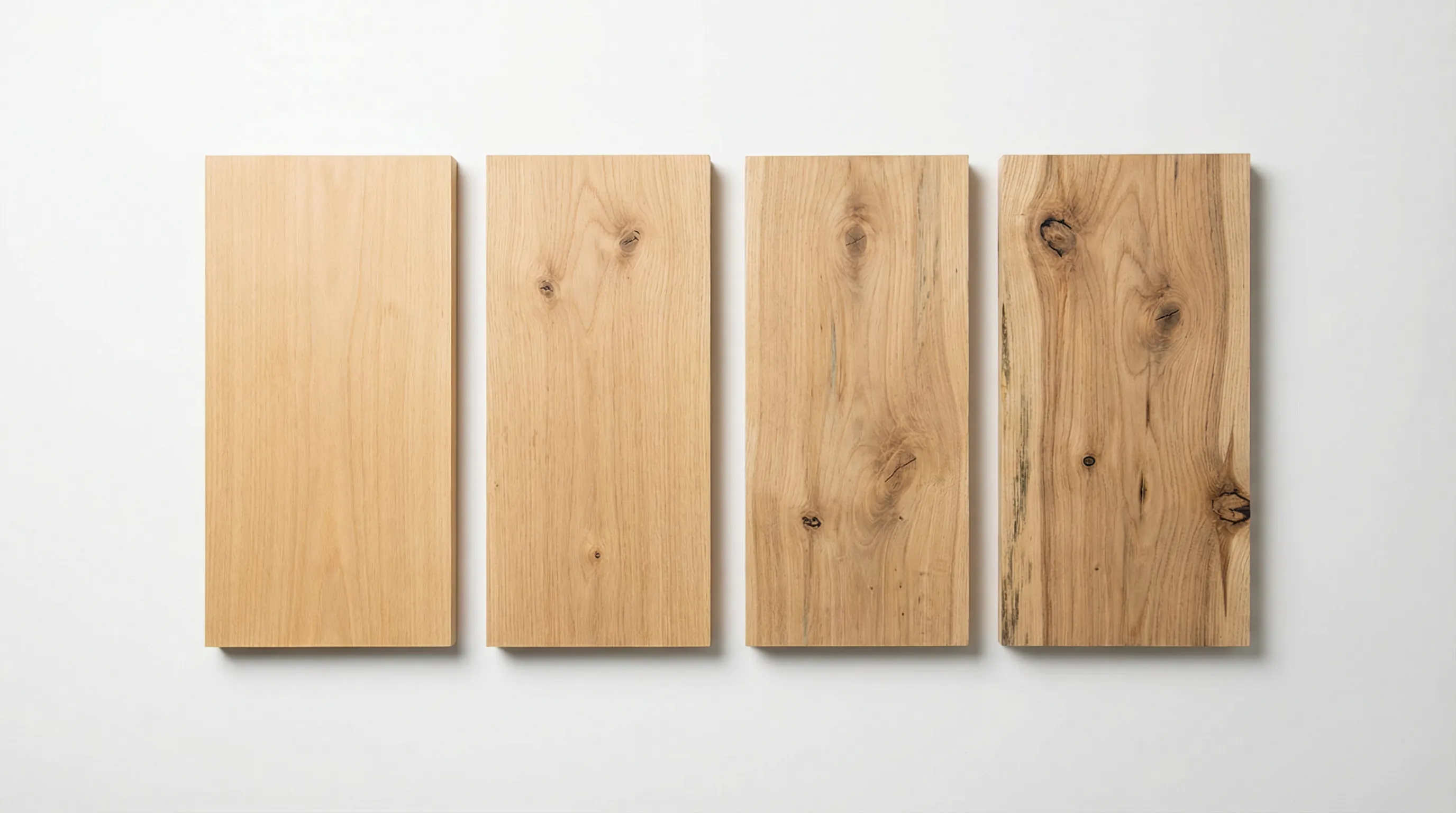
Prime grade timber is the product of precise sorting. Planks selected to this grade share a quiet consistency: colour variation is minimal, knots are either absent or present only as very small, tight features, gum veins are sparse and fine, and sapwood — the lighter outer wood from near the bark — is all but eliminated.
Characteristics
- Knots: Very few; where present, small and tight (typically < 10mm diameter)
- Gum veins: Minimal, fine, infrequent
- Checks/splits: Negligible to absent
- Sapwood: Very limited
- Colour variation: Low — planks read as highly consistent
- Overall character: Clean, refined, homogeneous
Design Application
Prime grade is the natural choice for minimalist and contemporary interiors where the floor is meant to recede — to act as a seamless, neutral platform for furniture, architecture, and art. The low visual noise of Prime grade makes it highly compatible with open-plan spaces where long sight lines demand consistency, and with monochromatic interiors.
Specifiers working on high-end residential apartments, gallery-style homes, or Japandi-influenced projects frequently default to Prime for precisely this reason: the floor does its work quietly. It is the hardest grade to source consistently at scale, as it requires the highest proportion of a given log’s yield to be graded out.
Select Grade: Elegance with Warmth
Select grade occupies the sweet spot for many projects — refined enough for contemporary living, warm enough to feel natural rather than clinical.
Characteristics
- Knots: Small to medium, occasional; typically sound and tight
- Gum veins: Fine, occasional — visible but not dominant
- Checks: Fine surface checks possible; generally minor
- Sapwood: Noticeable but moderate
- Colour variation: Moderate — warmth and tonal movement visible across the floor
- Overall character: Balanced, warm, elegant
Design Application
Select grade introduces a degree of organic variation that prevents the floor from reading as manufactured or homogeneous, while maintaining enough visual order to suit transitional and contemporary-classic interiors. The moderate colour variation — tones shifting from honey through to warm amber in European Oak, or pale grey-brown through to warm ochre — gives Select grade floors a lived-in quality that is immediately inviting.
For the broad centre of Melbourne’s residential market — the renovated Victorian terrace, the new-build executive home, the coastal family residence — Select grade delivers the balance of elegance and warmth that most homeowners are intuitively seeking when they ask for “something natural-looking but not too rustic.”
Natural Grade: Character in Full Expression
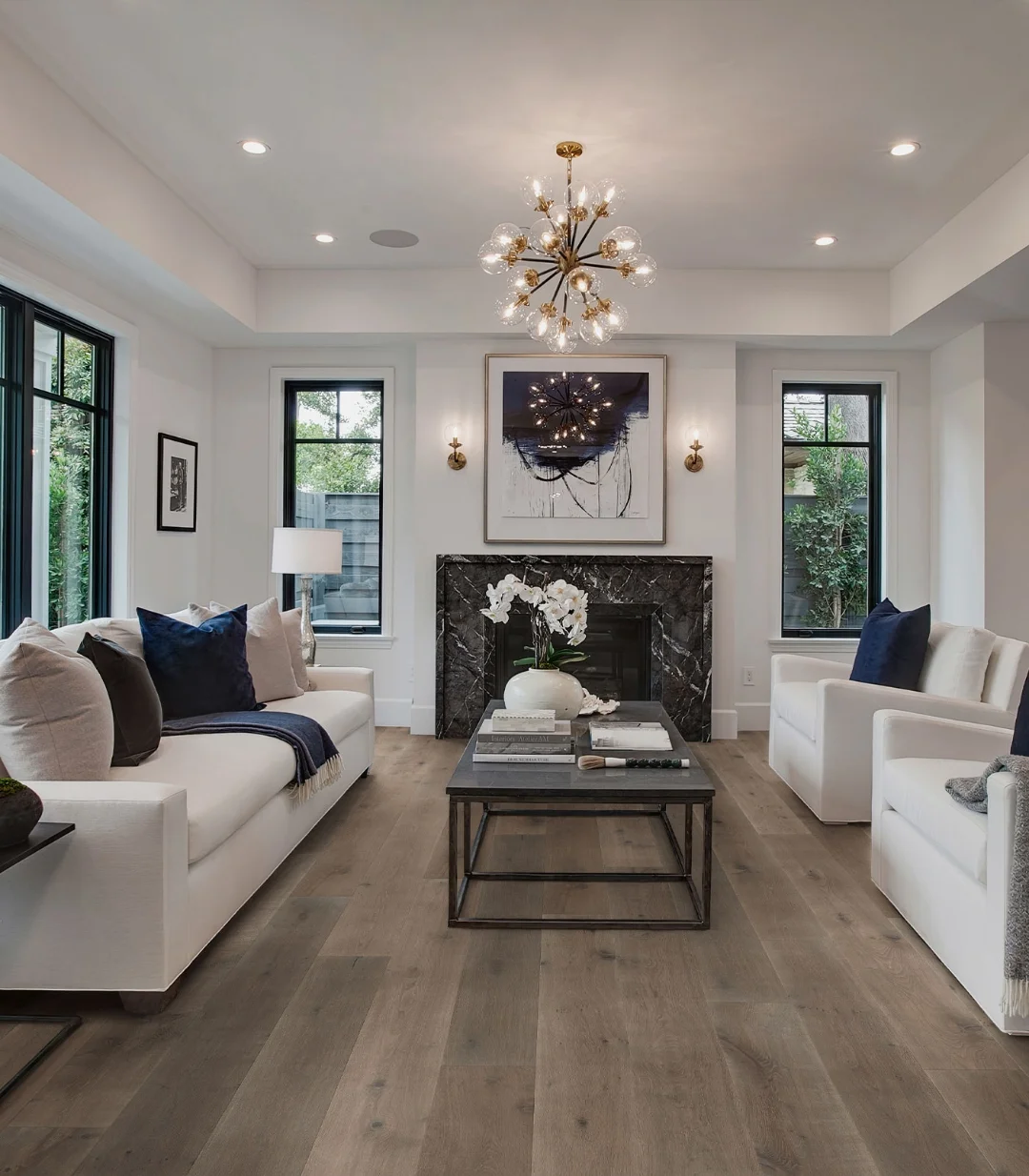
The most popular grade of timber in Australia, natural grade is where timber begins to assert its personality. The knots are more frequent, more varied in size, more visually assertive. Gum veins track longer and bolder across the face of planks. Sapwood is prominent, creating dramatic tonal shifts from plank to plank. Surface checks and fine splits may be present, and in many cases, these are addressed with special fillers as part of the manufacturing process.
Characteristics
- Knots: Frequent, varied sizes; may be tight, sound, or partially open
- Gum veins: Visible, varied in width and length, distributed across planks
- Checks/splits: Visible; typically filled with colour-matched resin
- Sapwood: Prominent, contributing to high tonal variation
- Colour variation: High — significant plank-to-plank tonal movement
- Overall character: Rustic, individual, expressive
The Role of Industrial Filler
A technically important aspect of Natural and Feature grade floors is the use of a special filler in the manufacturing process. Where splits, open knots, or checks are present, precision-applied filler — often colour-matched to the surrounding timber — is used to stabilise the feature and provide a smooth, continuous surface underfoot.
This is standard practice and should be understood as a feature of authenticity, not a remediation of defects. The filler becomes part of the floor’s visual narrative, drawing attention to the very characteristics that make each plank unique. Clients who select Natural grade and subsequently question the presence of filler have often not been adequately briefed during the selection process — a gap that our consultation process at The Flooring Centre is specifically designed to address.
Design Application
Natural grade performs exceptionally in interiors where the floor is meant to anchor and define the character of the space rather than recede into the background. Coastal Australian homes, contemporary rural retreats, and urban loft conversions all benefit from the organic richness of Natural grade. The prominent sapwood in species like Blackbutt and Spotted Gum introduces a creamy, pale counterpoint to the rich heartwood tones, creating a floor that shifts and moves visually with changing light.
Feature Grade: Unapologetically Bold
Feature grade is the most characterful selection in the hardwood spectrum — and for many designers, the most exciting to work with. Planks at this grade carry the full biography of the tree: large, sometimes open knots; dramatic mineral streaks; prominent insect trails preserved in resin; bold gum veins that carve their way across entire plank faces; and sweeping colour shifts that take a single board from near-black heartwood to pale cream sapwood within its length.
Characteristics
- Knots: Frequent and large; includes tight, open, and filled knots; may include dead knots stabilised with resin
- Gum veins: Bold, prominent, expected on most planks
- Checks/splits: Expected; filled repairs are standard
- Sapwood: Very prominent; dramatic colour contrast to heartwood
- Insect trails, mineral streaks: Characteristic; adds depth and individuality
- Colour variation: Very high — dramatic, bold tonal shifts
- Overall character: Raw, industrial, artisan, farmhouse
Design Application
Feature grade is the choice for interiors that make a statement with their materiality. Industrial fit-outs — exposed concrete, raw steel, aged leather — are dramatically anchored by Feature grade floors that match their textural ambition. Farmhouse interiors and heritage-inspired projects benefit from the floor’s authentic, aged quality, which no artificial treatment can replicate.
The critical caveat in specifying Feature grade is managing client expectations proactively. Every plank will be different. The floor will not look like the single sample board shown in a showroom. When Feature grade is installed, it transforms — individual planks that look striking in isolation become a cohesive tapestry across a room. Designers experienced with this grade often request that clients view an installed reference project before committing, precisely because the whole is so different from the part.
Grade Comparison: At a Glance
Why Colour Variation Happens: The Science Behind the Spectrum
The colour variation between planks — and within a single plank — that distinguishes the grades from each other is a product of timber biology, not random inconsistency.
Heartwood vs Sapwood: Every tree trunk contains two distinct wood types. Heartwood, the dense inner core, is rich in extractives and oils that give each species its characteristic colour — the deep honey of European Oak, the warm chocolate of American Hickory, the rich red-brown of Blackbutt. Sapwood, the younger outer wood that was actively conducting water and nutrients when the tree was alive, is lighter, often creamy or pale in colour, and lower in density. The ratio of heartwood to sapwood in any given board depends entirely on where in the log cross-section that board was cut. Prime grade minimises sapwood through selective sorting; Feature grade embraces it.
Growth Conditions: The density and colour of growth rings reflects the environmental conditions during each year of the tree’s life. Years of good rainfall and nutrient availability produce wide, lighter rings; dry or stressed years produce narrower, darker rings. A log from a tree that grew in variable conditions — as most old-growth eucalypts did — will yield planks with inherently more tonal variation than a log from a plantation species grown under controlled conditions.
Mineral Content and Extractives: The presence of mineral streaks — dramatic dark lines that occasionally appear in Oak and many Australian species — reflects soil mineral content absorbed during growth. These features are structurally benign and aesthetically compelling at Feature grade.
Matching Grade to Interior: A Design Framework
The most common error in grade selection is treating it as a quality decision rather than a design decision. The following framework helps align grade choice with interior direction:
Choose Prime when:
- The design intent is calm, minimal, and controlled
- The floor needs to recede and serve other design elements
- The colour palette is monochromatic or tightly controlled
- The client values consistency and uniformity
Choose Select when:
- The design intent is warm and transitional
- A natural feel is desired without strong rusticity
- The floor is one of several visual elements competing for attention
- The client wants versatility across changing décor choices
Choose Natural when:
- The design celebrates organic materials and texture
- The interior references coastal, rural, or biophilic aesthetics
- Feature-rich flooring is the design anchor
- The client actively values individuality over uniformity
Choose Feature when:
- The interior is bold, raw, and materially ambitious
- The design references heritage, industrial, or artisan aesthetics
- The floor is the dominant design statement of the space
- The client is experienced with natural materials and understands variation
A Note on Batch Variation and Installation
Regardless of grade, one practical consideration applies to all hardwood flooring projects: batch variation between production runs. Even within the same grade and species, different manufacturing batches can exhibit subtle tonal differences due to variations in the source logs. Always order at least 10% more flooring than the calculated room area, both to accommodate cutting waste and to ensure a consistent visual result if repairs or extensions are ever required.
During installation, experienced flooring contractors draw from multiple boxes as they go. This deliberate randomisation of planks prevents unintended clustering of similar features (a run of very knotty boards, for example, or a patch of pale sapwood) and creates the visually balanced result that defines a professional installation.
The Expert Guidance
No sample board in a showroom tells the whole story of a grade. The true nature of a Natural or Feature grade floor can only be understood at scale — when planks are laid edge to edge and the full tapestry of the grade emerges.
The right grade is the one that makes your space exactly what you envisioned. At every point on the spectrum from Prime to Feature, there are extraordinary floors waiting to be created.
Published by The Flooring Centre — Melbourne's premium carpet and flooring superstores. Visit our Nunawading and Hawthorn showrooms.